


Unfreeze Your Shoulder; Reclaim Your Active Life
How Our Multidisciplinary Approach Can Help You Manage Frozen Shoulder
We recently worked with a patient who came to us after struggling with shoulder pain for several months. While she hoped it would go away on its own, it only got worse over time. When she visited us, she was also struggling to lift her shoulder overhead or reach behind her back.
This patient had developed adhesive capsulitis, more commonly known as frozen shoulder. It gets that name from the fact that the condition causes the shoulder to “freeze up” after a period of intense pain.
A frozen shoulder will eventually “unfreeze,” but that process can take anywhere from 1-3 years. Fortunately, the team at Hands of Hope can help you manage your symptoms and facilitate a more efficient recovery.

We’ve Expanded! Now Serving Patients in Bay Ridge
We’re excited to share some great news. Hands of Hope has opened a location in Bay Ridge, making it even easier for our patients to access high-quality, compassionate care close to home.
Our Bay Ridge clinic offers the same personalized, one-on-one physical therapy experience our patients know and trust. Whether you’re recovering from an injury, managing chronic pain, or looking to improve strength and mobility, our licensed therapists are here to help you move better and feel stronger.
The new location is conveniently located at 8009 5th Ave, Brooklyn, NY 11209. Call us at (917) 818-1807 today!
What Causes Frozen Shoulder?
The condition develops when the capsule of connective tissue that wraps around your shoulder thickens and tightens, restricting the joint. However, researchers aren’t entirely clear why this happens. Certain factors can increase your risk:
- Being a woman between the ages of 40 and 60 years old
- Having certain diseases, including diabetes, thyroid conditions, or cardiovascular disease
- Immobilizing your shoulder after an injury or surgery.

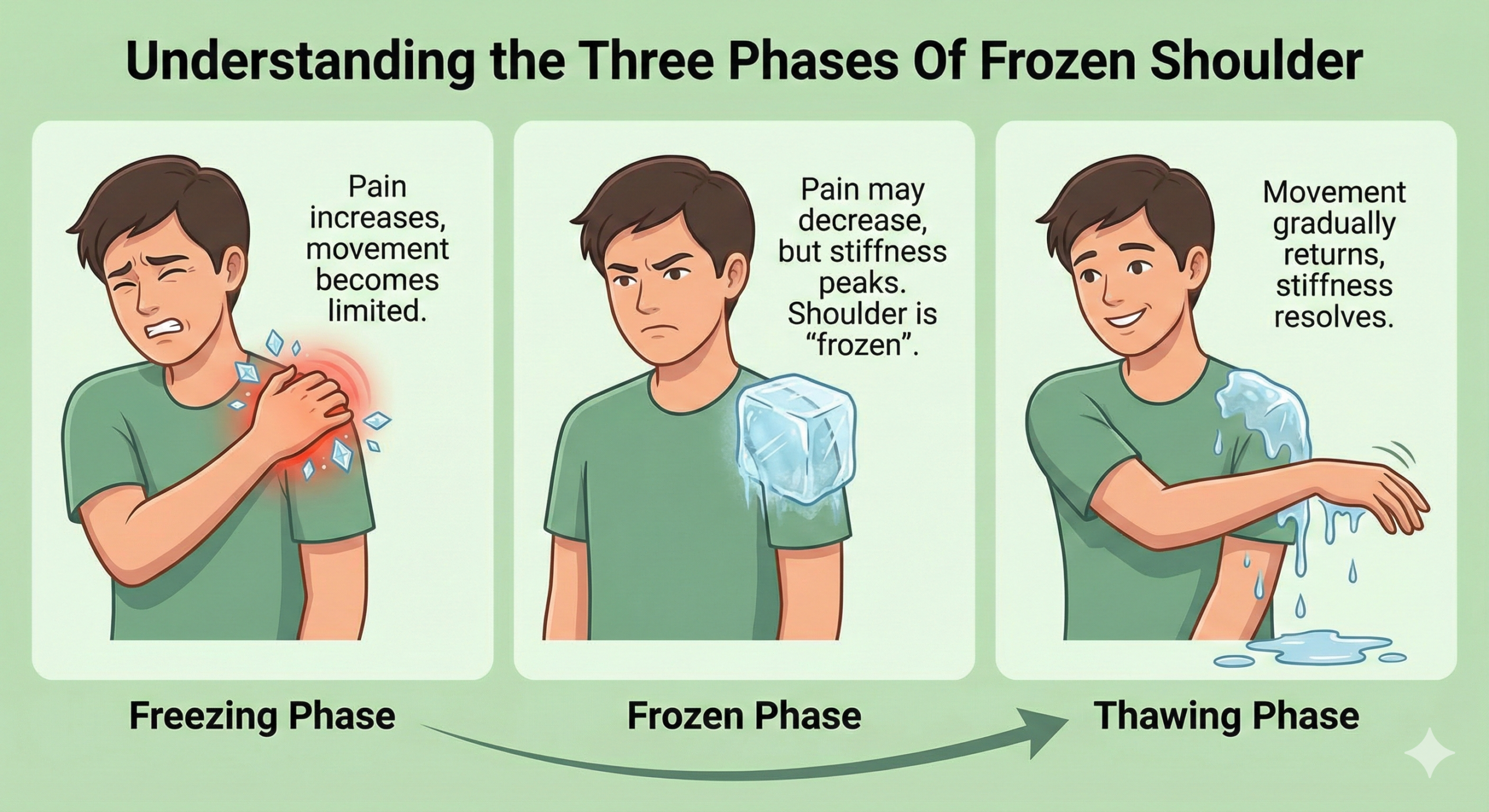
Understanding the Three Phases Of Frozen Shoulder
One reason frozen shoulder recovery can take so long is that the condition progresses through three distinct phases, each with its own set of symptoms and concerns. Here’s what you need to know about each one:
Freezing Phase
This initial stage is marked by increasing pain and stiffness in the shoulder. During this phase, we focus on maintaining your shoulder’s range of motion to help reduce stiffness and improve comfort.
Duration
Anywhere from six weeks to nine months
Symptoms
1. Pain is often worse at night, disrupting sleep
2. A gradual onset of pain that worsens with movement
3. Increased stiffness in the shoulder
Frozen Phase
The frozen stage involves less pain but greater stiffness, significantly restricting your shoulder’s movement. We’ll focus on improving your shoulder mobility using stretching or manual therapy techniques.
Duration
Anywhere from four to six months
Symptoms
1. Everyday movements like reaching overhead or behind the back become challenging
2. Decreased pain compared to the freezing stage
3. Significant stiffness and difficulty moving the shoulder
Thawing Phase
In the final stage, your pain decreases, and your shoulder’s range of motion gradually returns. However, it’s important to continue treatment to ensure you make a full recovery.
Duration
Anywhere from six months to two years
Symptoms
Pain continues to decrease
Gradual improvement in mobility as scar tissue around the shoulder capsule begins to loosen and break down
Treating Frozen Shoulder: What You Need to Know
Our team can play an essential role in helping you manage frozen shoulder symptoms at all three stages. Our team will work with you to develop a comprehensive treatment program, pulling from a range of different techniques based on your current symptoms:
Initial Pain Management
- We’ll help you manage shoulder pain (especially in the freezing phase) with techniques such as manual therapy, Kinesio taping, hot and cold therapy, and more.
Advanced Pain Management
- If your shoulder pain is particularly intense, we might recommend more advanced pain management techniques, such as shoulder joint injections or trigger point injections. These approaches involve inserting pain medication directly into the affected area, making it easier for you to perform therapeutic exercises.
Targeted Exercises
- Targeted exercises and techniques help improve your shoulder’s strength and range of motion in all directions, gradually restoring your ability to reach, lift, and perform other functional movements.
Therapeutic Yoga
- Our yoga classes offer an additional way to build shoulder strength and improve shoulder joint stability.
Management Strategies
- Understanding frozen shoulder is an integral part of managing it. We’ll help you navigate the difficulties of the condition, including identifying which stage you’re in and providing you with home exercises to help alleviate your symptoms.

Ready to Break Free From the Icy Grip of Frozen Shoulder?
If you suspect you have frozen shoulder, schedule an appointment at Hands of Hope. Our comprehensive approach can help manage the condition across all three phases, and the earlier you begin treatment, the better your outcomes will be. We’re here to help you manage pain, restore mobility, and understand your shoulder’s movement patterns.
Don’t let frozen shoulder hold you back. Call us today to schedule your initial evaluation!
Exercise of the Month
Shoulder Extension Side Lying
(Shoulders)
Lie on your side with a pillow supporting your head. Put a towel under your elbow with your arm bent. Rotate your arm up. Pause briefly, then return to the starting position. 3 Sets, 10 Reps (each arm). (Materials needed: floor mat, lightweight)
🎉 Upcoming Community Events at Hands of Hope 🎉

We love creating spaces for our patients and community to connect beyond the clinic. Join us this month for one of our complimentary upcoming in-clinic events:
Yoga for Valentine’s – Atlantic
Celebrate love, movement, and self-care with a relaxing yoga session at our Atlantic location on Valentine’s Day. This gentle class is perfect for all levels and a great way to unwind, stretch, and show your body some love.
Skincare & Self-Care – Williamsburg
Stop by our Williamsburg location for a skincare-focused event centered on self-care and wellness. Learn tips for healthy skin while enjoying a calm, welcoming environment.
Hot Chocolate & Coffee – Astoria, Woodhaven & Morris Park
Warm up with us! Visit our Astoria, Woodhaven, or Morris Park locations to enjoy hot chocolate and coffee while you relax, connect with our team, and recharge.
Therapeutic Ultrasound:
A Powerful Tool for Shoulder Pain Relief
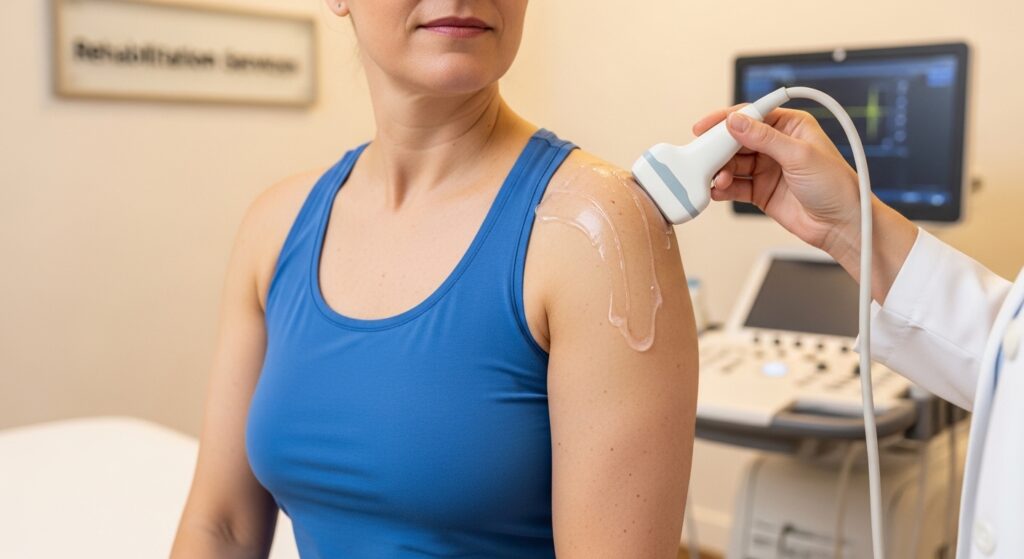
Shoulder pain can make even simple daily activities like reaching overhead, lifting, or sleeping comfortably feel frustrating and limiting. One effective treatment your physical therapist may use to address shoulder discomfort is therapeutic ultrasound, a non-invasive, evidence-based modality designed to promote healing and reduce pain.
Therapeutic ultrasound uses high-frequency sound waves that penetrate deep into the tissues of the shoulder, creating both thermal and non-thermal effects. The thermal effects gently heat muscles, tendons, and ligaments, helping to increase blood flow to the injured area. This improved circulation delivers oxygen and nutrients that support healing while also improving tissue flexibility. As a result, patients often experience reduced stiffness, decreased muscle guarding, and improved shoulder range of motion.
In addition to heat, ultrasound produces non-thermal effects through a process called cavitation, where microscopic bubbles within the tissue expand and contract. This mechanical action helps stimulate cellular repair, improve tissue regeneration, and reduce inflammation. These effects are especially beneficial for common shoulder conditions such as tendinitis, bursitis, muscle strains, and joint stiffness.
At Hands of Hope, therapeutic ultrasound is often combined with hands-on techniques, targeted exercises, and functional training to create a well-rounded treatment plan. This comprehensive approach allows us to address pain while also restoring strength, mobility, and long-term shoulder function.
If shoulder pain is holding you back, therapeutic ultrasound may be an important part of your recovery. Talk to your physical therapist to see if it’s right for you, and take the next step toward moving comfortably and confidently again.
Honoring Ramadan
As Ramadan approaches, we want to take a moment to recognize and honor this meaningful time of reflection, fasting, and community for many of our patients.
At Hands of Hope, we value inclusivity and respect for all cultural and religious traditions. We wish peace, health, and wellness to everyone observing Ramadan.

Bircher Muesli (Overnight Oats)
This healthy and delicious breakfast dish originates from Switzerland and will keep you going all morning.
Ingredients:
- 1 cup raspberries (fresh or defrosted from frozen)
- 2/3 cup strawberries (hulled weight) (fresh or defrosted from frozen)
- 3/4 cup plus 1 tbsp unsweetened low fat milk
- 2 1/2 cups gluten free porridge oats or rolled oats
- 2/3 cup low-fat natural yogurt
- 1 1/4 cups blueberries (or blackberries), fresh or frozen
- Crushed or chopped toasted almonds, to sprinkle (optional)
Instructions:
Place the raspberries and strawberries in a non-metallic bowl and mash well with a fork. Add the milk and mix well, then add the oats and mix again. Stir in the yogurt, then add the blueberries and combine everything thoroughly. Cover the mixture and refrigerate overnight. When ready to serve, spoon into bowls, sprinkle each portion with almonds (if using), and drizzle with a little honey (if desired).
Don’t let frozen shoulder hold you back!
We know the stiffness and pain of a frozen shoulder can be frustrating, but you don’t have to manage it alone. A personalized recovery program from Hands of Hope can help improve your range of motion so you feel more capable in your day-to-day life.