



Back Pain Slowing You Down?
Try Our Pain Management Services!
Here’s a fact about back pain that may bring you some comfort: it’s one of the most common musculoskeletal complaints in the world. Around 80% of people will have back pain at least once. So, if you’re suffering now, you probably aren’t the only one!
Of course, that thought does little to help if your back pain keeps you from performing day-to-day activities — as it often does. Back pain is often accompanied by mobility restrictions that make walking, rising from sitting, or bending over difficult. And if left untreated, it can sometimes lead to long-term pain and dysfunction.
At Hands Of Hope Physical Therapy and Wellness, we know how debilitating back pain can be. Our team of dedicated pain management specialists will help you understand the cause or causes of your back pain and work with you to develop a personalized treatment plan that will let you get back to the activities you love to do.
What Causes Back Pain?
One reason back pain is so common is that it’s associated with several different injuries, underlying conditions, or lifestyle factors. That said, most back pain is nonspecific, meaning it’s not caused by a specific disease or structural problem but by mechanical issues. Mechanical issues are difficult to pinpoint and may include multiple tissues in and around the spinal joints.
The first step in treating your back pain is understanding what’s contributing to it. Our pain specialists will perform a comprehensive evaluation to help us learn as much as possible about your experience with back pain. This includes a detailed medical history, physical examination, and diagnostic tests like an X-ray or, in some cases, an MRI to accurately diagnose the condition you’re struggling with.
Here are some of the more common sources of back pain that we see at our clinic:
- Strains and Sprains: A strain occurs when you injure the muscles in your back. A sprain occurs when you injure the ligaments that link your spinal vertebrae. Both can cause pain and limited mobility, and they often result from lifting with improper form (such as twisting while lifting) or attempting to lift something too heavy.
- Herniated Discs: Soft, flexible discs separate and cushion your spinal vertebrae. If one of those discs herniates—that is, protrudes out—and irritates a nearby nerve, it can lead to intense pain, feeling “stuck” in a stooped-over position, and often pain down the leg, known as sciatica.
- Osteoarthritis: Osteoarthritis is the most common form of arthritis in the world, occurring when the cartilage and bone tissue in a joint degenerate and become inflamed. While we often associate it with the hips, knees, or hands, it can occur in the spine, too. Spinal osteoarthritis is sometimes called spondylosis.
- Spinal Stenosis: Spinal stenosis is a medical condition characterized by the narrowing of the spaces within the spine, which can put pressure on the spinal cord and the nerves that travel through the spine. Symptoms of spinal stenosis can include pain, numbness, tingling, and weakness in the arms or legs, depending on the affected area.
Why Hands of Hope Is Your Comprehensive
Back Pain Management Solution
Back pain often resolves on its own within 1-3 months. However, those with particularly intense pain or extremely restricted mobility often need additional support. This is especially true for people with chronic back pain—defined as pain that lingers past that three-month mark.
Our team of nurse practitioners, physical therapists, and other pain management specialists will work together to develop a customized back pain treatment plan according to your needs. We’ll consider the location and severity of your back pain, any mobility restrictions, your ability level, and overall goals.
How will we do this? Through a blend of the following techniques:
- Facet Joint Injections: Facet joint injections are a minimally invasive procedure where a local anesthetic and corticosteroid mixture is injected to alleviate pain and inflammation in the facet joints, which are the small joints between each pair of vertebrae.
- Nerve Root Blocks: This procedure involves injecting a local anesthetic and a corticosteroid near the nerve root where it exits the spinal column. Nerve root blocks can help reduce pain, inflammation, and swelling in conditions like sciatica or radiculopathy, where nerve roots are compressed or irritated.
- Epidural Steroid Injections: During this procedure, a corticosteroid and a local anesthetic are injected into the epidural space, which is the area surrounding the spinal cord and nerve roots. This treatment provides long-term relief by decreasing inflammation around the affected nerves for herniated discs, spinal stenosis, and chronic back pain.
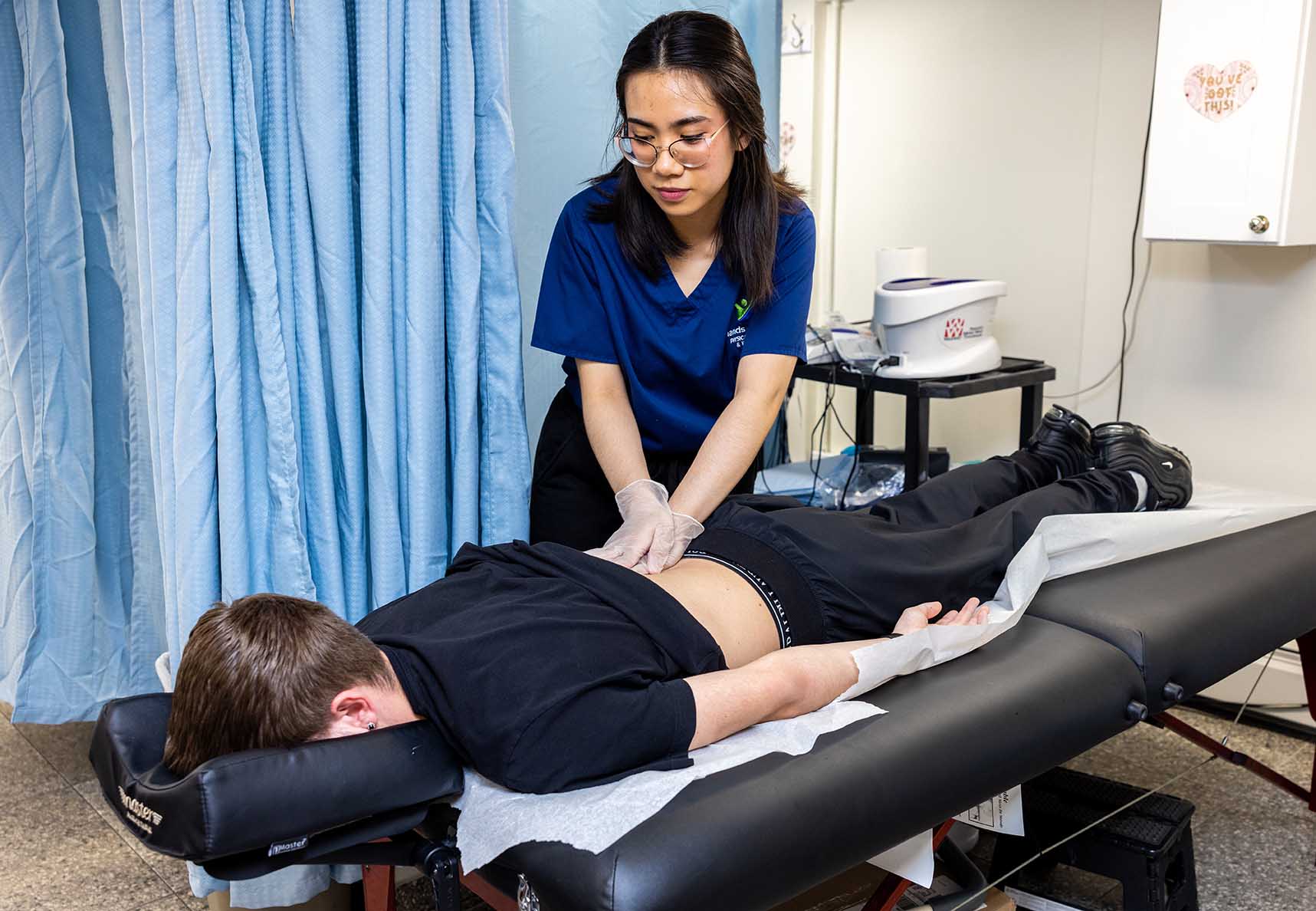
Manual therapy helps manage pain, promote blood circulation, and improve mobility.
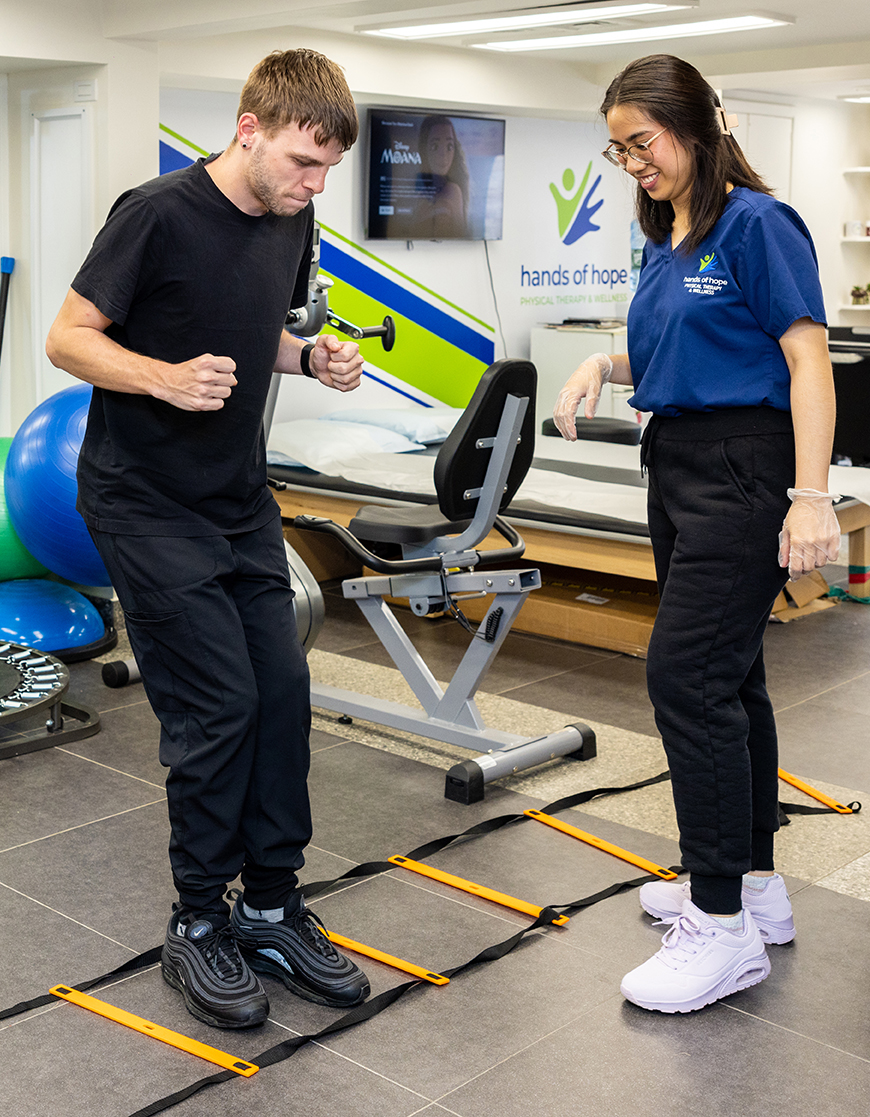
A personalized therapeutic exercise plan improves the strength of your back and core muscles. Muscle weakness and restrictions in the joints significantly contribute to lower back pain, so exercise is a must.
Prevention strategies help reduce future back pain incidents. These strategies might include postural corrections or suggestions for at-home exercises, such as a walking program or regular strength and mobility practice.
Get Moving Again Today!
Back pain is more than just pain. It can severely restrict your mobility, leading to less exercise and movement, further contributing to pain and dysfunction. The Hands Of Hope Physical Therapy and Wellness team is here to help you break that cycle and find relief from back pain for good.
Break that cycle and find relief from back pain for good.
The Hands Of Hope Physical Therapy and Wellness team is here to help you!
Exercise to Try at Home
Try this simple exercise to keep you moving
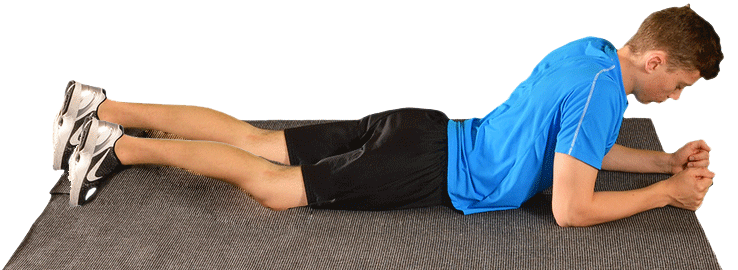
Prone Press Up
Lie on your stomach, hands beside your shoulders. Push with your arms up on to your elbows. Hold for 10 counts then return to start position. Repeat 8 times.


Healthy Recipe
Easy Mango Protein Smoothie
Start your day with something healthy
Ingredients
- 1/2 cup unsweetened vanilla
almond milk - 1/2 cup low-fat vanilla Greek yogurt
- 1 cup frozen mango chunks (or about 1/2 of a fresh, chopped mango with 1/2 cup of ice)
- 1 scoop vanilla whey protein powder
- 1 tsp honey or to taste (optional)
- 1 mint sprig (optional)
Directions
- Blend mango, ice (if using), yogurt, almond milk, protein powder, and honey together in a blender until smooth.
- Garnish with a mint sprig if desired, and enjoy!
Meet Our Team

Ahmed Ebeid
Medical Director