


Common Causes of Foot Pain–And How Physical Therapy Can Help
You want to go for a nice evening stroll or spend an afternoon at the mall. But that pain in your foot makes prolonged walking seem like an impossibility. Now what?
Foot pain is a common problem–and one that can have a significant impact on your day-to-day life. If severe enough, it becomes a risk factor for other concerns, particularly among older people, including decreased balance, increased fall risk, and general loss of mobility.
Fortunately, physical therapy at Hands of Hope can help you find relief. Our team of experts will dig down to identify the root cause of your pain. Then, we’ll develop a customized treatment plan to resolve the underlying injury or condition, helping to ensure lasting relief.
Don’t let foot pain hobble you completely! Give us a call to set up an appointment to uncover the source of your foot discomfort.

What Are the Common Causes of Foot Pain?
When determining the source of your foot pain, you’ll first want to pinpoint where the pain is coming from. Is it along the bottom of your foot? Is it along the top of your foot? In your heel? Could your ankle be involved?
Our therapists will conduct a detailed evaluation to ensure we fully understand your symptoms. We’ll review your health history and recent activities and perform a physical examination that gives a complete picture of your condition. From there, we can determine the underlying injury or condition causing you pain.
While causes of foot pain vary wildly, here are some of the most common:
- Plantar Fasciitis: This is the most common cause of foot pain, occurring in about 10% of the general population. It causes pain and stiffness along the bottom of your foot and into your heel and occurs when certain tissue (the plantar fascia) becomes swollen and inflamed.
- Achilles Tendonitis: Another example of inflammation in foot tissue, Achilles tendonitis causes pain and range of motion restriction in the tendon that runs along the back of your heel (the Achilles tendon).
- Heel Spurs: This condition refers to a bony growth that develops on your heel bone due to stress and strain on the ligaments and tendons.
- Stress Fractures: Stress fractures are small cracks in the bone that generally occur due to overuse. While they can happen anywhere, your feet are particularly susceptible as they absorb much of the impact from activities like running, excessive walking, and jumping.
What Physical Therapy Can Do To Help
Determining the cause of your foot pain gives us the information we need to create a customized treatment plan to tackle your foot pain at the source. We pull from a range of different techniques that can help reduce symptoms and improve overall functionality.
Here are just a few techniques we might incorporate:
- Manual Therapy: These non-invasive, hands-on techniques manipulate joints and soft tissues to manage pain and improve overall foot mobility.
- Modalities: Various treatment modalities, such as electrostimulation and ultrasound techniques, can provide additional pain relief. In some cases, they can even enhance your body’s healing processes.
- Therapeutic Exercise: We’ll provide a targeted, personalized exercise program to stretch and strengthen your foot and ankle muscles. Depending on your needs, we can also work on balance and stability.
- Lifestyle Modifications: Often, foot pain stems from lifestyle factors, such as wearing improper footwear or starting a new high-impact exercise regimen. We’ll help you identify these factors and suggest strategies for managing them.
During your sessions, we’ll generally begin with acute pain relief before moving on to more active treatments. As you progress through your targeted exercise program, our therapists will ensure you perform those exercises correctly and monitor your progress, increasing the intensity as you improve.
Schedule An Appointment Today
The first step in resolving your foot pain is correctly identifying its cause. To learn why your foot is hurting, call Hands of Hope to schedule your initial consultation. We’ll have you on your way to an active lifestyle in no time!
Sources: https://www.ncbi.nlm.nih.gov/books/NBK431073/, https://bjsm.bmj.com/content/55/19/1106 , https://www.ncbi.nlm.nih.gov/pmc/articles/PMC5112330/ , https://orthoinfo.aaos.org/en/diseases–conditions/stress-fractures-of-the-foot-and-ankle/
Shockwave Therapy – Your Hidden Weapon Against Foot Pain
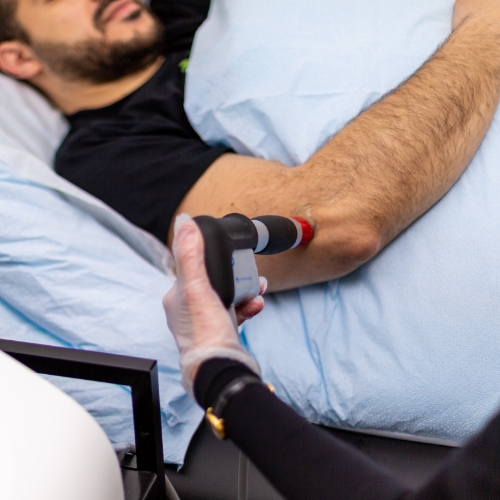
A Non-Invasive Method for Treating A Variety of Conditions
Have you recently suffered a sports injury? Are you struggling with musculoskeletal pain? Shockwave therapy at Hands of Hope could be the non-invasive pain management tool you’re looking for!
The term “shockwave therapy” might sound alarming. Its full name–extracorporeal pulse activation technology (EPAT)–sounds like something out of science fiction. However, there’s nothing to fear from shockwave therapy, which uses high-energy sound waves to reduce pain, facilitate healing and blood circulation, and minimize inflammation.
When paired with other physical therapy treatments, this simple technique can help you find lasting relief. Contact one of our [state-name-one] or [state-name-two] clinic locations to learn more!
*Shockwave Therapy Is a Cash Based Service, Not Covered by Insurance.
What Conditions Benefit from Shockwave Therapy?
Shockwave therapy is an effective tool for managing pain and mobility restrictions stemming from soft tissue injuries, such as sprains, strains, and tendinopathies). However, it can also help with joint disorders, such as osteoarthritis.
We often use shockwave therapy to treat the following:
- Tennis elbow
- Runner’s knee
- Plantar fasciitis
- Achilles tendonitis
- Carpal tunnel syndrome
- And many more!
Exercise of the Month
Ankle Alphabets
Start by sitting up straight in a chair. Raise one leg out in front of you. Slowly write the letters of the alphabet with your foot, only moving at your ankle joint. 3 Sets, 10 Reps. (Materials needed: chair)

Are Your Shoes the Cause of Your Foot Pain?
Who doesn’t love a great pair of shoes, especially when they’re the final touch on a knockout outfit? Unfortunately, shoes are more than just a fashion statement–they can also contribute to foot pain.
At Hands of Hope, we can let you know for certain if your shoes are causing your foot-related woes. In the meantime, here are some simple guidelines to remember the next time you go shoe shopping.
A Physical Therapist’s Guide to Finding the Perfect Shoe
- Make sure it fits. Cinderella’s stepsisters learned it the hard way: it doesn’t matter what a shoe looks like if it doesn’t fit your foot. If your shoes are too tight or restrictive, your feet will not have full mobility, leading to pain and other discomfort.
- Pointed toes are out this season. Those fierce pointy-toed shoes might look great, but they squeeze your toes together in a way that can cause problems in your toe joints.
- So are high heels. A severe high heel looks fabulous (and sounds even better), but it forces your foot into an unnatural shape, leading to significant impacts on the overall health of your feet–not to mention a higher risk of sprained ankles, lower back pain, and balance issues!
- But comfort and support are in. The best shoes are the ones that feel good while wearing them and after you take them off. In most cases, these shoes provide your foot with the support it needs to work correctly, ensuring the foot is protected and feeling good.
Okay, so our physical therapists may not be your first choice for fashion tips–but we can help you avoid persistent, debilitating foot pain. Schedule an appointment today to learn more about the right shoes for healthy feet!

BLT Caesar Pasta Salad
BLT Caesar Pasta Salad combines the yummiest, well-dressed Caesar salad with the summertime favorite, BLT. Then add some bow-tie pasta, homemade croutons, spicy cheddar cheese, and handfuls of garden basil for a most delicious salad that comes together quickly and with little effort.
Caesar Dressing:
- 1/2 cup mayo
- 2 tablespoons extra virgin olive oil
- 2 tablespoons lemon juice
- 1 tablespoon Champagne vinegar
- 1 tablespoon Dijon mustard
- 2 teaspoons Worcestershire sauce
- 1-2 cloves garlic grated
- 1/2 cup grated parmesan cheese
- salt and black pepper
Pasta Salad:
- 2 cups torn ciabatta
- 1 clove garlic, sliced or grated
- 2 tablespoons olive oil
- 1 pound short cut pasta
- 1 head romaine lettuce, shredded
- 2 cups cherry tomatoes halved
- 1 cup cubed spicy cheddar cheese
- 8 slices cooked bacon, crumbled
- 1 cup fresh basil leaves torn
Instructions:
- To make the dressing: Combine all ingredients in a glass jar and whisk until smooth. Season with salt and pepper.
- Preheat the oven to 425° F. Toss together the ciabatta, garlic, and a pinch of salt with the olive oil. Bake for 10-12 minutes until toasted.
- Bring a large pot of salted water to a boil. Boil the pasta to al dente, according to package directions. Drain.
- In a large bowl, toss the hot pasta with the dressing and cheese cubes. Mix in the lettuce, tomatoes, bacon, and croutons, tossing to combine.
We’re Here to Help, Every Step of the Way
We know pain can be alarming, but you don’t have to manage it alone. A personalized therapy program from Hands of Hope can help reduce your symptoms so you feel more confident in your day-to-day life.